
Table of Contents
A successful outing can be very short
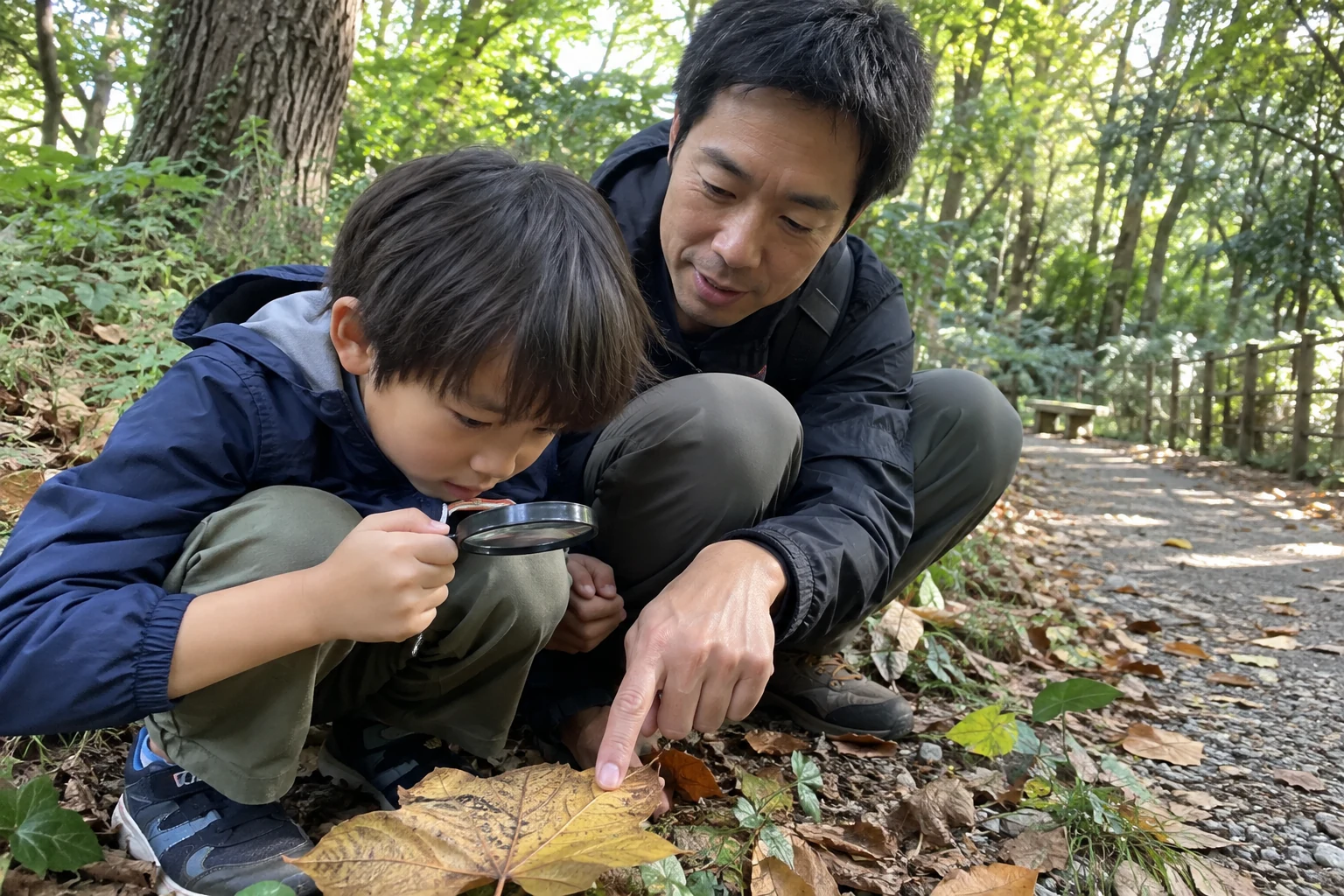
Nature sometimes begins right outside your building, in a backyard, or along the walk to school. A stroll doesn't need to cover a set distance or uncover a rare species. Together with your child, you can pause to look at a leaf with holes, a puddle, a seed, or a bird perched on a wire. Observation grows from whatever catches their eye.
Choose a route suited to your available time and family energy level. A 4 to 6-year-old might want to stop frequently; an older child might suggest a path or keep a quick mental list of things spotted. If weather or fatigue shifts your plans, the observation game works just as well from a balcony or window.
Giving a mini observation quest
Before heading out, suggest an open-ended goal: spot three things that move, two round shapes, or a sound you hadn't noticed before. A checklist with pictures can help younger children remember what to look for, but isn't required. For an older child, try comparing what you see in two different spots or sketching a detailed observation.
Let your child lead part of the search. They can choose the next tree to look at or decide when to take a breather. If you don't know the answer to a question, look it up together in a book later or discuss what clues might help identify it. Saying "I don't know, let's check" makes genuine space for curiosity.
Observing wildlife without disrupting it
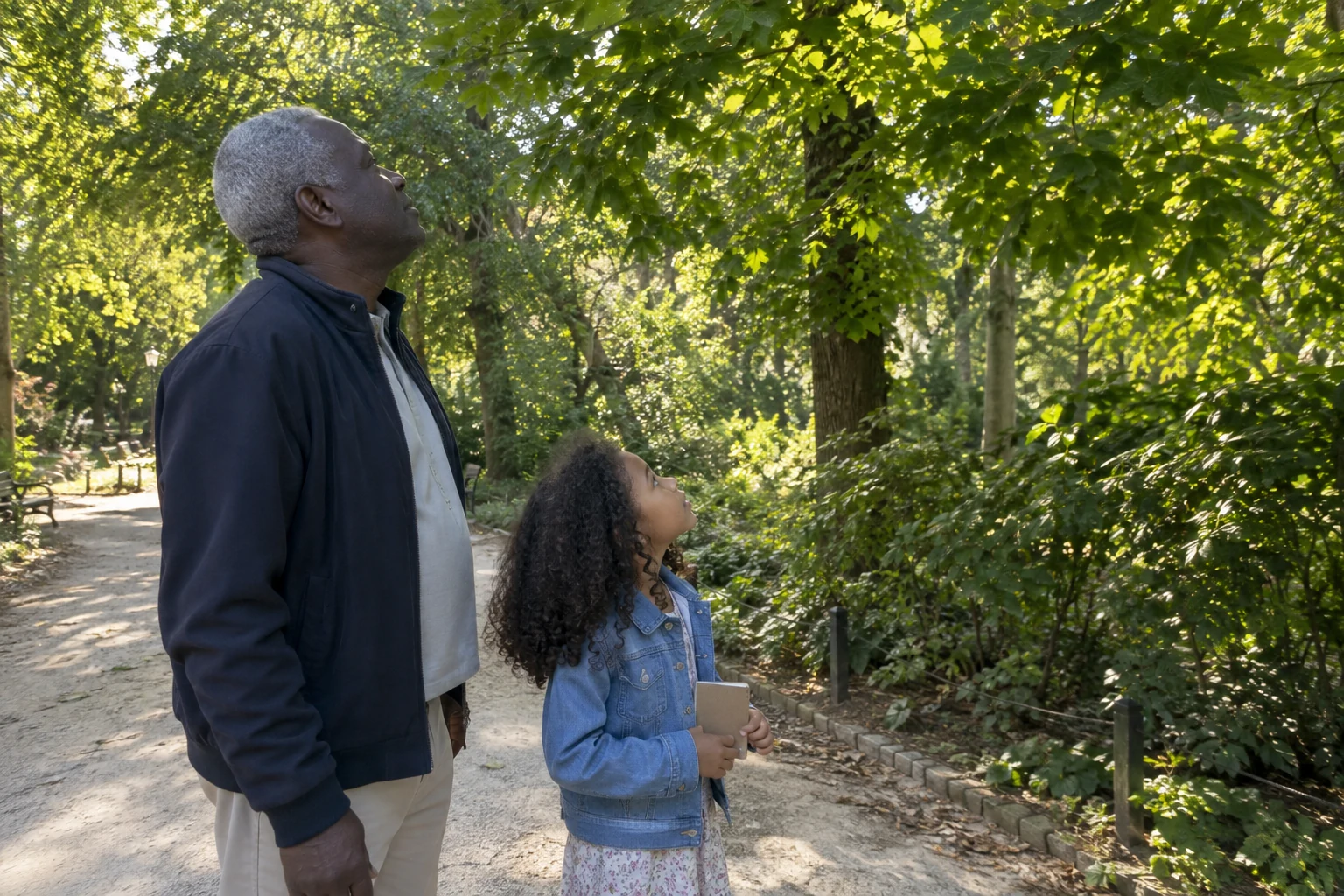
When watching an insect or a snail, keep a comfortable distance and avoid picking it up. You can track its movement with your eyes, listen to a bird, or study tree bark textures without tearing off leaves. Depending on the area, certain plants or animals are protected: if in doubt, simply observe and leave the place exactly as you found it.
You don't need a phone to preserve a memory. Your child can talk about what they saw, draw a shape when you get home, or point out the path on a map. If you pick up fallen items, pick just one or two and double-check local rules. The walk stays enjoyable as long as discovering nature doesn't turn into a checklist to complete.
To go further: Creative games for children: ideas without complicated supplies.
Engaging the senses and language
Pause to listen to sounds, feel the breeze, or watch shadows move. Avoid touching or tasting unfamiliar plants. Open-ended questions give children time to describe: "What looks different between these two leaves?", "What sound do you hear?", or "Where could that shadow be hiding?" Answers don't have to be scientifically accurate to keep observation going.
If your child prefers to run around or chat about something else, set the mission aside. You can point out a detail in passing without forcing them to stop. Simply enjoying being outdoors matters too; there's no need to turn every walk into a science lesson.
Little discoveries bingo
Draw four boxes on a sheet of paper: a round shape, something rough to look at, a leaf on the ground, and a pleasant sound. During the walk, your child checks off or draws what they spotted. With older children, replace the boxes with three questions to check when you return. The paper sheet remains optional: you can also play by sharing your discoveries out loud.
Choose a record without turning the walk into collecting
A walk may make your child want to bring home every interesting object. First check with an adult what collecting is permitted and what is suitable to handle. An observation, sketch, or description can preserve a memory without removing the object. If a clean fallen leaf may be collected there, choose just one for a home trial. Nothing is tasted and unknown plants stay where they are.
At the table, separate what you saw outdoors from what a paper record shows. A tree leaf may reveal some veins, but the result also depends on paper, stability, and movement. An incomplete outline does not mean your child observed poorly during the walk. Ask them to describe differences between the leaf and its mark without turning the comparison into a species-recognition test or drawing contest.
| Reference | Question |
|---|---|
| Outside | Can we observe without collecting? |
| At the table | What does the mark actually show? |
Keep a connection to the place only if it helps revisit the memory. A date or sentence is enough; no distance measurement or complete record is required. Offer the table activity another day if helpful, and let your child choose free drawing instead. Keeping that choice makes the walk a shared experience rather than compulsory supply collection for a project that must be completed afterward.
To go further
Preview before choosing
Les Grands Curieux · Ages 7–10
For children who are beginning to read instructions on their own and enjoy playing with words, numbers, and riddles. An adult can help with reading.