
Table of Contents
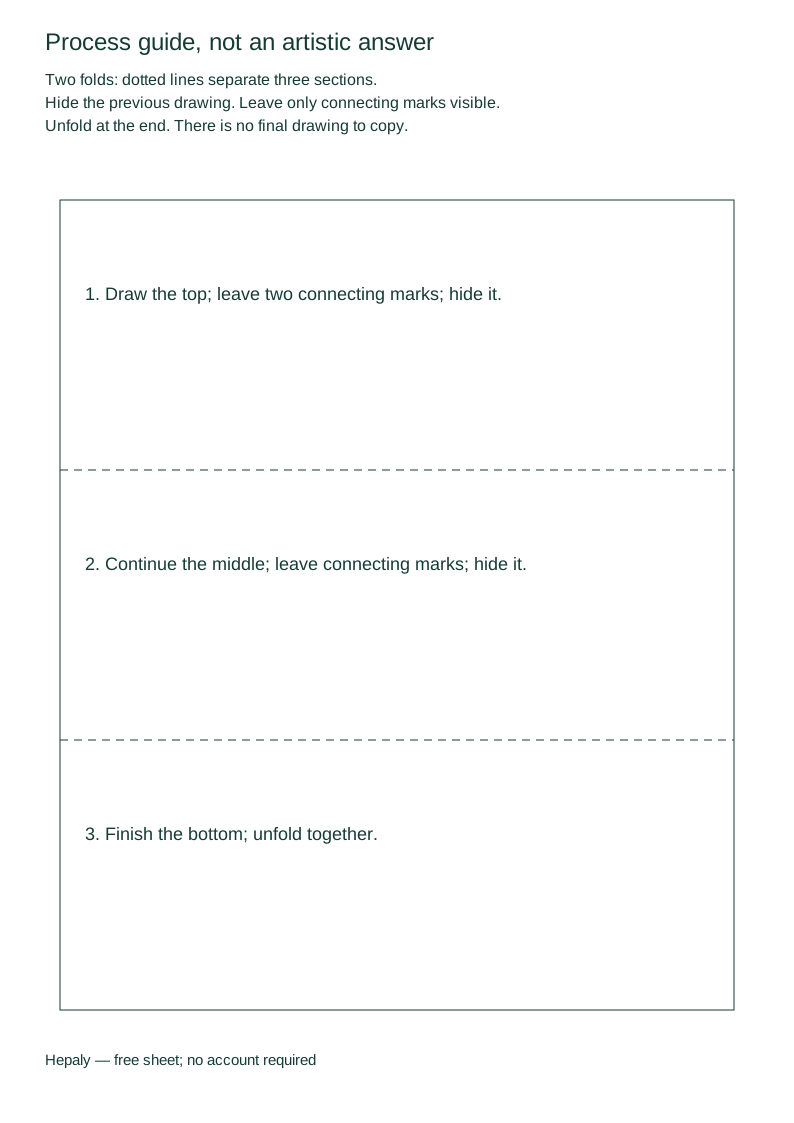
To play exquisite corpse, divide a sheet into three sections. Each person draws in one section, folds the paper to hide their contribution, and leaves small connecting marks for the next person. Unfold it together at the end. The fun comes from a shared surprise, with no model to copy or drawing to grade.
What materials do you need?
Use ordinary paper and pencils appropriate for your child. An adult can prepare the folds before starting. A clear table is enough; this version needs no scissors, glue, or special supplies. Choose paper opaque enough that the hidden drawing does not show through.
With two players, one person can draw the first and third sections. With three, each person draws one. Explain the turns at the start so nobody waits for a turn that will not happen. With siblings, agree on roles together: the number of sections is a practical rule, not a ranking of participants.
| Option | Materials | Suggested time | Possible support |
|---|---|---|---|
| Ages 4–6 | Paper and pencils | One drawing at your pace | An adult folds the paper |
| Ages 7–10 | Same materials | One or more drawings | One constraint chosen together |
What shared rule should you explain?
Suggest an imaginary figure in three parts: top, middle, and bottom. It might have a creature’s head, a geometric body, or invented feet. Agree on the structure while leaving each player free to draw their part. Do not ask your child to guess what the previous person intended.
MoMA and the Centre Pompidou describe concealed contributions in collaborative Surrealist drawings. This family activity simplifies the setup; it does not reproduce a museum artwork. If the name puzzles your child, call it “a shared surprise drawing” before explaining the historical name.
Open three reminders
Draw in your section
Keep the agreed top, middle, and bottom sections.
Hide your own contribution
Leave only small connecting marks visible.
Wait for the final reveal
Unfold together and describe what you see.
How do you fold and leave connecting marks?
Make two folds to create three horizontal sections. The first player draws in the top section. Before hiding it, extend two small lines beyond the fold so the next player knows where to connect their drawing. Keep the rest of the contribution concealed. Demonstrate on scrap paper if folding is unfamiliar.
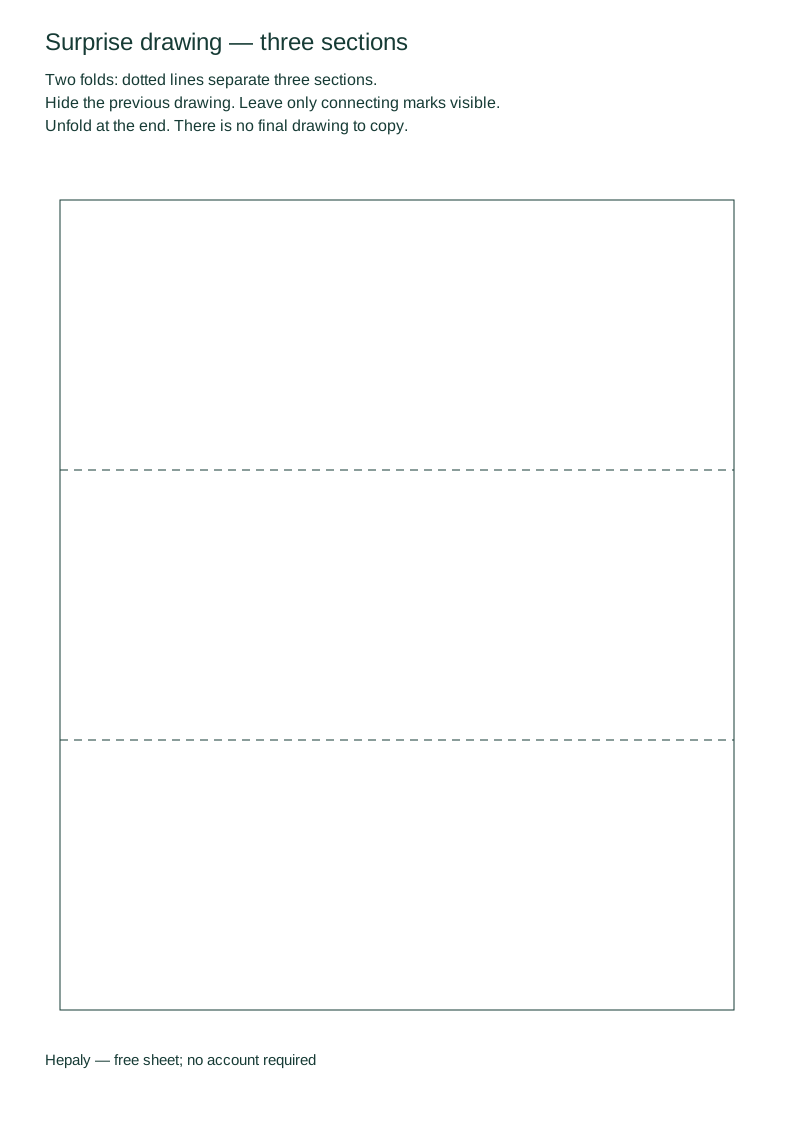
The second player starts from those marks, draws the middle, and leaves new marks toward the final section. The third player finishes the bottom. With two players, the first player takes that last turn without looking at the hidden middle. The free sheet provides sections and folding guides; players create their own connecting marks rather than completing a preprinted figure.
Check the rule, not the artwork
How many sections do two folds make?
Three sections in this version.
What if someone sees the hidden drawing?
Decide together whether to continue or restart, with no penalty.
Does a mismatched connection make a bad drawing?
No. Keep it or connect it with everyone’s agreement.
What if the lines do not connect?
Unfold the sheet at the end without expecting a perfect result. A mismatch can stay as it is, become an invented detail, or be connected with everyone’s agreement. Ask before changing someone else’s contribution. The rules organize turns; they do not make the adult responsible for correcting the drawing into a realistic image.
If someone accidentally sees a hidden section, acknowledge it and decide together whether to continue or use a new sheet. There is no need for a penalty. You can also play with everything visible; call that version “an open collaborative drawing,” because it changes the surprise. Our creative games guide offers other adaptable rules.
Open the separate answer sheet
How can you adapt the activity?
For younger children, an adult can hold and fold the paper while the child chooses shapes. Reduce the number of passes if waiting becomes difficult. Older children might enjoy one agreed constraint, such as using only rounded shapes. Change one rule at a time to discover what your group prefers.
The age bands in the table are suggested options, not skills due by a certain birthday. A child may prefer a simple line or watch the first round. Our drawing development guide is not a ranking system for this game. Leave room for free play: your child may want to change the rules or stop.
What can you tell after unfolding?
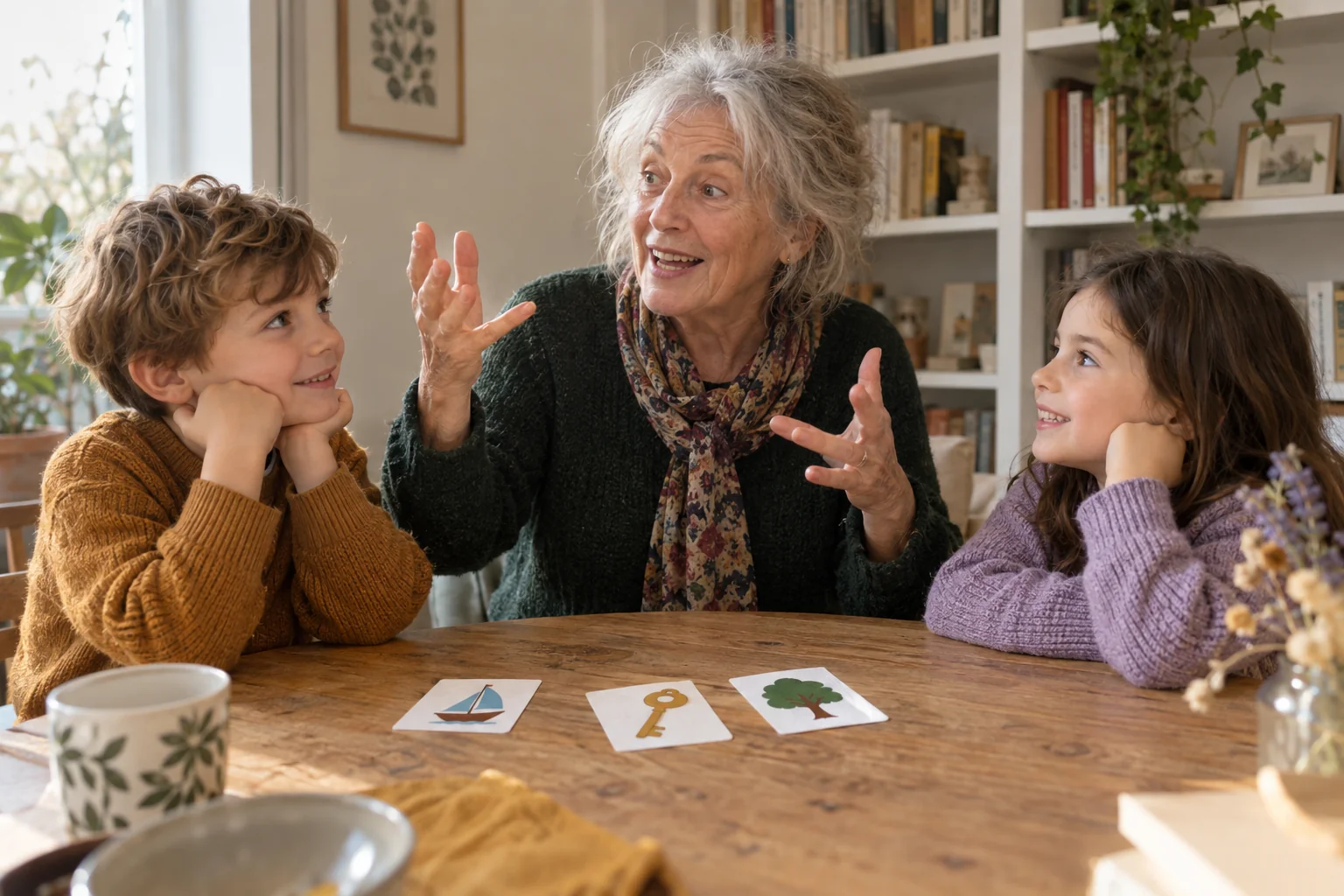
Invite everyone to describe what they see before telling a story. “I see boots under a round shape” leaves room for several interpretations. If you add a name or adventure, present it as a new shared invention. You do not need to decide who had the best idea or uncover a hidden intention.
To continue, our guide to making up a story helps you choose a character and a small event. Keep the drawing private if you prefer, and ask everyone before sharing it. For other paper activities, Hepaly PDFs are commercial 64-page French workbooks to download and print. This activity’s free sheet is available in French, English, and Spanish.
Before starting
Check items to prepare; no data is stored.
Frequently asked questions
Can two people play?
Yes. One person draws the top and bottom, the other the middle, keeping sections hidden until the end.
Do we need drawing skills?
No. Simple lines and shapes are enough; no realistic model is required.
How many folds do we need?
Two folds for this three-section version. Other versions are possible when everyone understands the rule.
What stays visible for the next player?
Only the small connecting marks extended beyond the fold, without revealing the rest of the contribution.
Is there one correct final drawing?
No. The checking guide concerns the process, not the beauty or realism of the drawing.
Can we play without printing?
Yes. Fold ordinary paper into three sections; an adult can help prepare the folds.