
Table of Contents
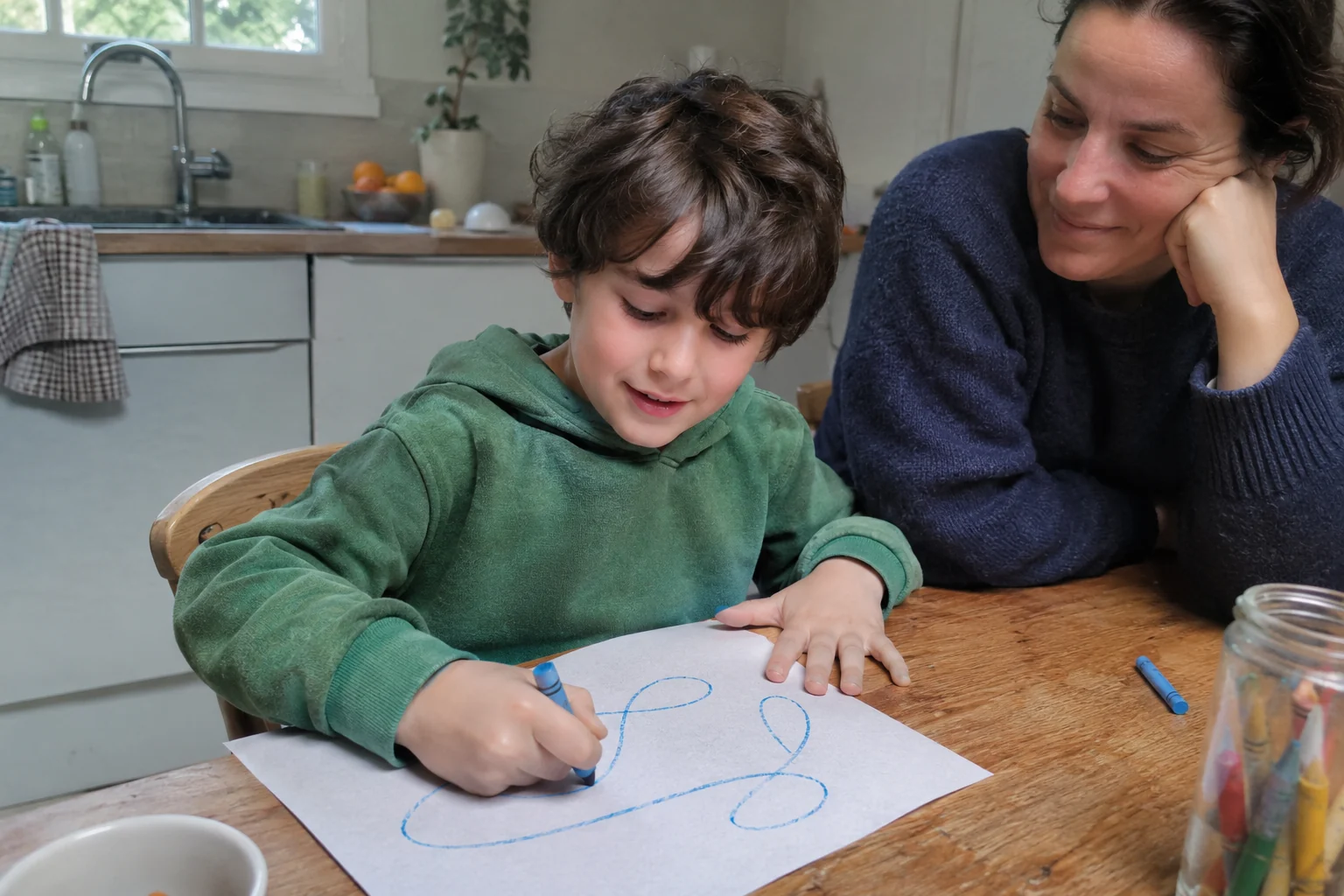
Continuous line drawing means keeping the pencil tip on paper during a small drawing. The line may turn, cross itself, or travel over a previous mark. It need not return to its starting point. Offer a simple subject, a short exploration, and permission to pause: this is neither a motor assessment nor a precision contest.
What should we prepare?
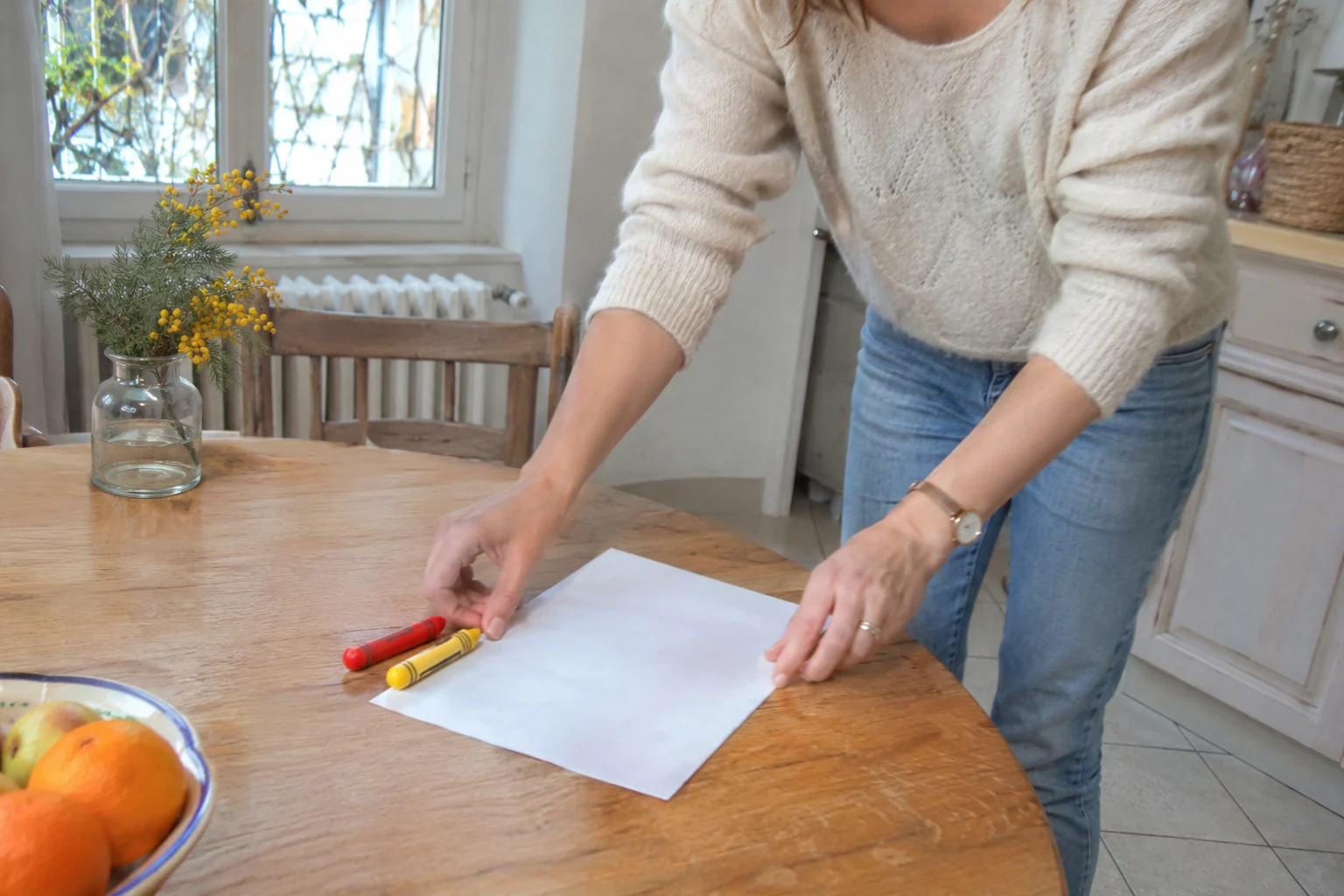
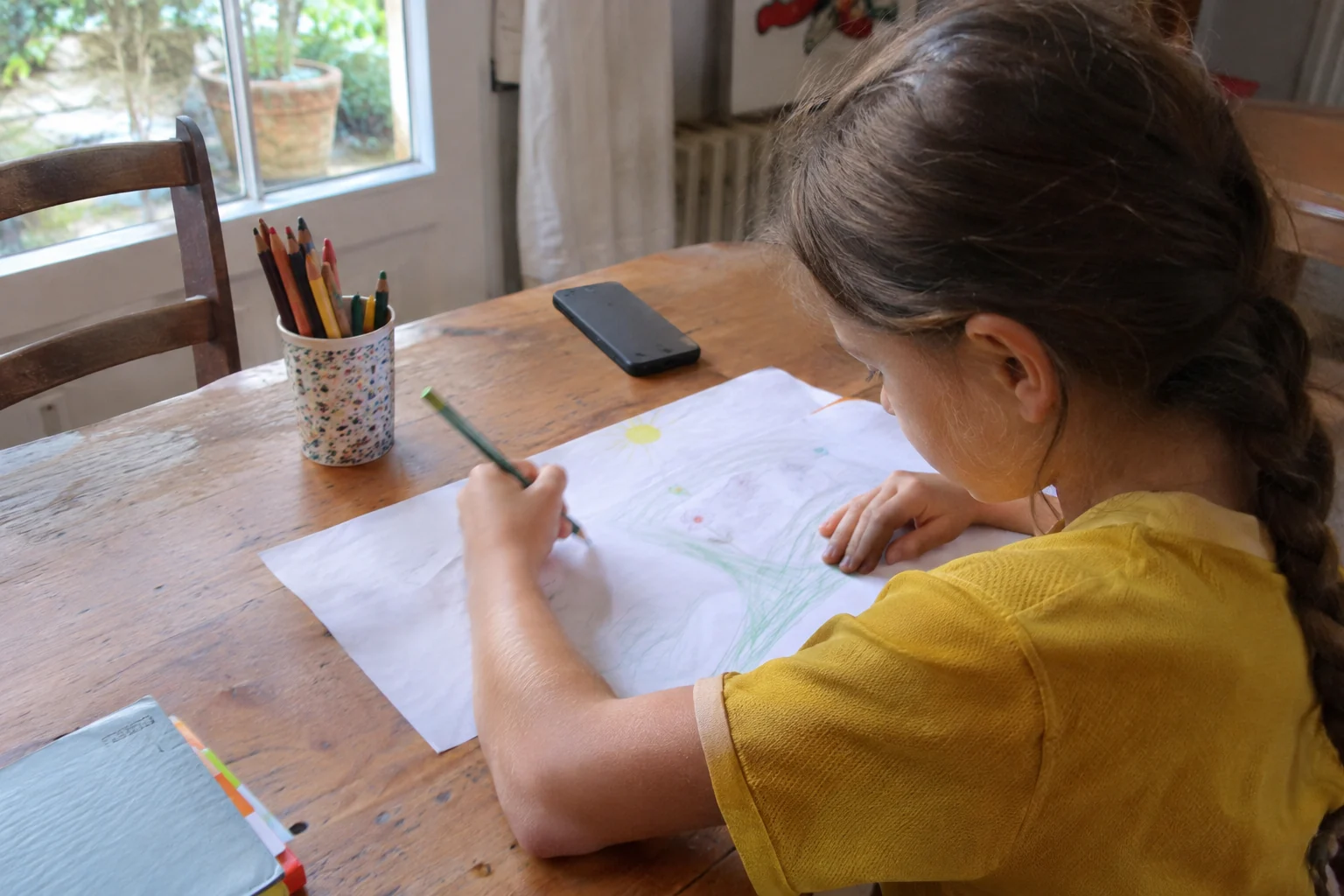
A sheet of paper and a pencil suitable for your child are enough. Use a stable table and clear space for the forearm. The free hand can hold the paper; an adult may help. Do not force a particular grip or right-handed drawing. Our guide to comfortable pencil use supports comfort rather than a picture-perfect hand position.
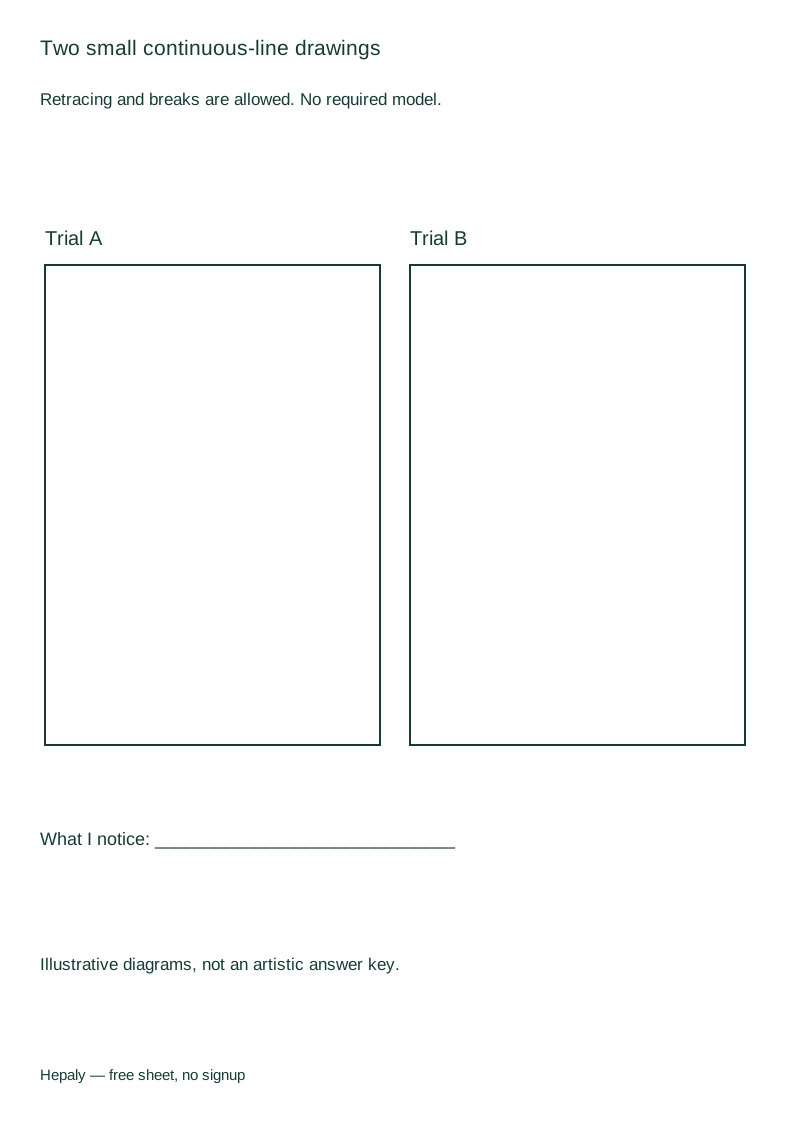
Show the idea with a small loop, then let your child choose a subject. A cloud, an imaginary cup, or a free path is more manageable than a landscape full of details. A French education resource proposes a house followed by a landscape; our session starts smaller and does not require that composition. Make two spaces on ordinary paper if you do not have a printer.
| Approximate age | Suggestion | Support |
|---|---|---|
| 4–6 years | Short path, large sheet | Hold the paper |
| 7–10 years | Freely connect two elements | Discuss a route |
Which rule keeps the game simple?
Say, “During this small drawing, try to keep the tip on the paper.” Your child may slow down or stay still briefly. Retracing a previous line is allowed: banning it would add a different puzzle constraint that is not part of this activity. A continuous line need not be closed. Its ends may stay apart, as our page about open and closed lines explains.
Keep the drawing if the tip lifts. Name what happened, continue from that spot, or try elsewhere. There is no penalty and no requirement to restart the whole page. The concrete aim is to explore a chosen drawing path. Time is not a score, and the result does not measure your child’s general abilities. Let the child decide when the little trial has reached a stopping point.
Three references
Keep paper stable
An adult can hold an edge.
Choose a small path
No perfect model is required.
Allow a break
The session may end at any time.
How can we adapt it from ages 4 to 10?
For a first attempt, offer a large area and a short movement. Your child can follow an invented path instead of copying yours. If they request an idea, a circle followed by a curve is enough; this need not turn into handwriting instruction. For a child who wants more complexity, suggest connecting two parts of a drawing with an invented route. The child chooses where the line goes.
In a fictional example, a child draws a house and notices that a window is far from the outline. They add a path between them. Ask “Which way would you like to go?” instead of correcting the shape. A setup for a left-handed child also leaves room on the drawing-hand side: move the paper before asking the child to work around an obstacle.
Check the rule
The tip lifts: what next?
Continue or stop, without penalty.
Must the outline close?
No, an open curve is allowed.
Can we retrace?
Yes, this activity allows it.
What can we notice after two attempts?
Invite your child to show the beginning, a crossing, and the end of the line without requiring them to reconstruct every movement. A different color on the second sheet can distinguish attempts. Describe a visible detail: “This path crosses that one.” Do not infer an emotion or developmental stage from the loops. A drawing is not a diagnosis.
The two free sheets provide drawing spaces and reference points rather than artistic answer keys. Many paths are possible; an empty frame is intentional. Keep a drawing only if your child wishes. For another session, creative games and free tools offer other activities. Hepaly’s commercial workbooks are 64-page French PDFs, separate from these free sheets in three languages. No purchase is needed. Put the materials away together and end when the activity stops being comfortable.
Open the illustrated references
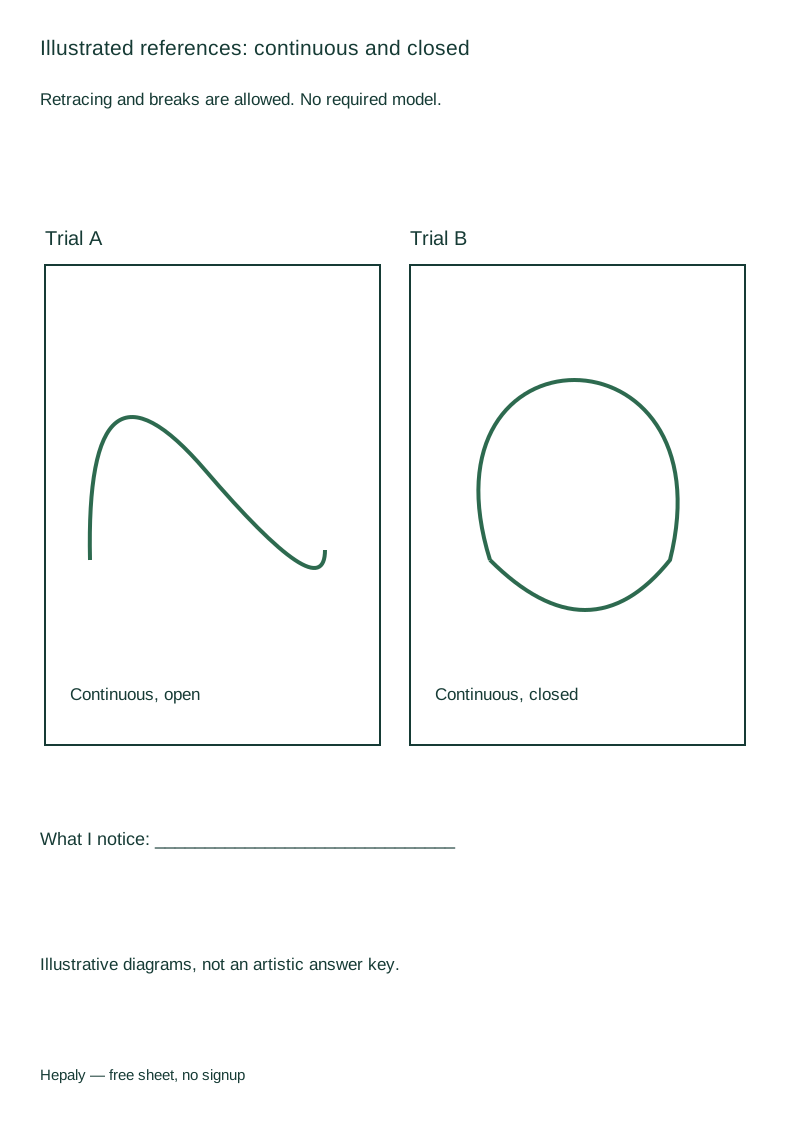
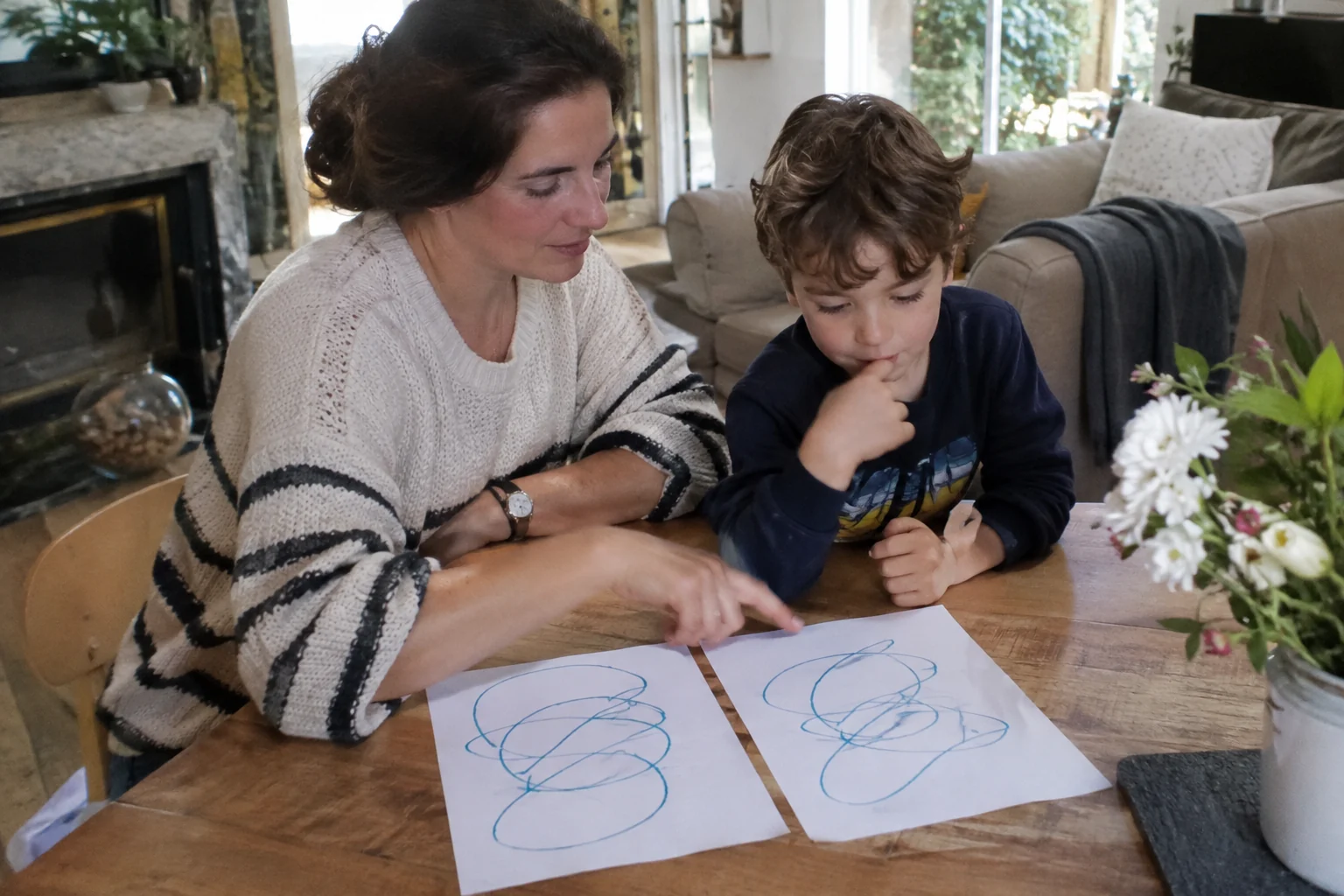
Prepare together
No data stored.
Frequently asked questions
Can we retrace a line?
Yes, our activity allows it.
Must we return to the start?
No. A continuous line can remain open.
What if the tip lifts?
Keep the drawing and choose to continue or stop.
Are pauses allowed?
Yes. Comfort matters more than the constraint.
Must we copy a model?
No. The subject and path may be invented.
Must we print?
No. Ordinary paper is enough.